INTRODUCTION
Fuel monitoring becomes far more useful when it is connected to GPS tracking. A fuel reading on its own can tell you that a tank level changed. Tracking can tell you when that change happened, where the vehicle was, and whether the trip itself matches the business plan. That combination gives managers a much clearer way to detect waste, understand normal behavior, and respond before a small issue becomes a recurring cost.
Why fuel data and location data belong together
Fuel usage never happens in isolation. It is affected by route choice, traffic, idle time, loading delays, driver behavior, and vehicle condition. If the business only sees fuel numbers, it may know that cost increased but not why. If it only sees location, it may know where the vehicle was but not whether the trip was efficient. When the two data streams are connected, the operating picture becomes much clearer.
That is why a GPS tracking solution with fuel monitoring is more useful than either tool alone. The team can compare trip history with fuel usage, identify when losses occurred, and understand which routes or behaviors create the most waste. A company that wants to move from reactive review to active control should treat both data sources as part of the same workflow. If the rollout also includes Vehicle GPS Tracking, the fleet can manage movement, cost, and accountability together.
How the system works in practical terms
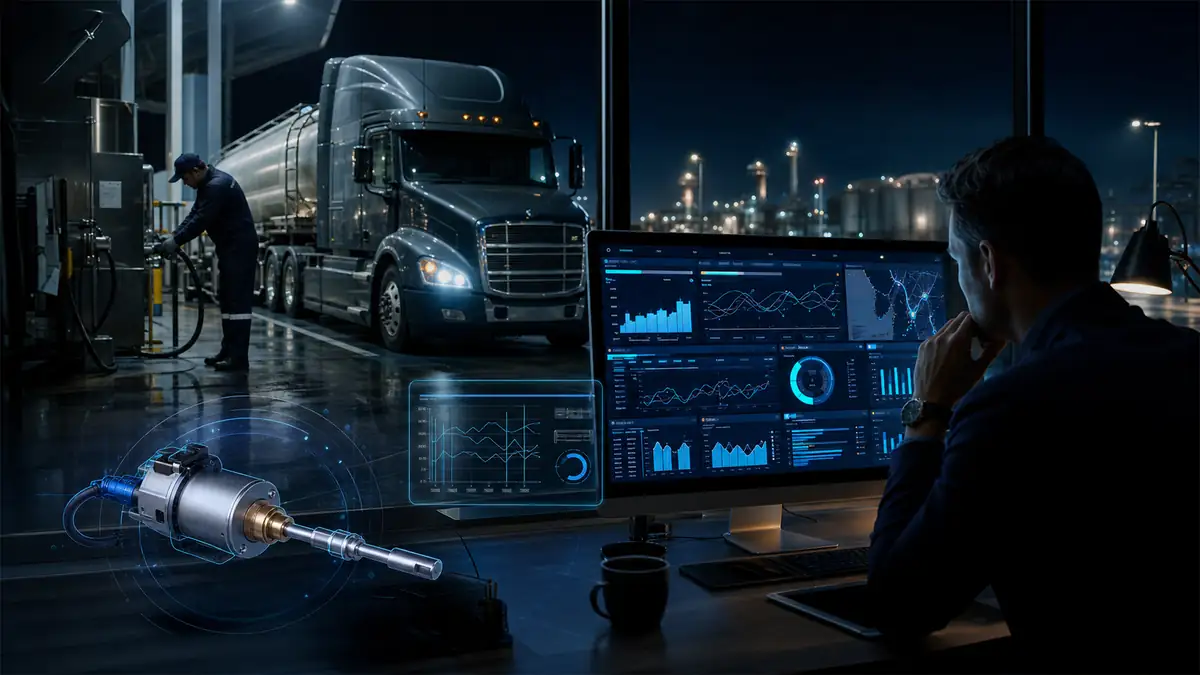
In a typical setup, fuel sensors monitor what is happening in the tank while GPS devices record the vehicle’s position, trip history, and movement pattern. The platform then brings those signals together so the team can review fuel changes beside route history, stop duration, and operational events. That allows the business to detect refueling, suspicious drops, or usage patterns that do not match the assigned trip.
What matters most is the ability to investigate in context. A fuel decrease may be perfectly normal if a truck spent the day on long-haul work. The same decrease may look suspicious if the vehicle sat idle for an unusual amount of time or took a detour it should not have taken. This is where the combination of live visibility and historical review becomes powerful. It gives managers evidence they can act on instead of assumptions they need to chase.
What teams can investigate more easily
- Unexpected fuel drops while the vehicle is parked or inactive.
- Trips that consume more fuel than similar assignments.
- Patterns that suggest route waste, mechanical problems, or misuse.
- Differences between expected and actual fuel use across branches or routes.
What the business gains from integrated visibility
The most obvious gain is lower waste, but the broader value is operational discipline. When fuel and movement are visible together, managers can spot issues earlier and coach with more confidence. Finance teams also get a cleaner explanation for cost changes because usage is not being viewed in isolation. The business can see whether a problem came from the route, the driver, the vehicle, or the process around the trip.
This has practical value across logistics, construction, delivery fleets, and service operations. A logistics company can track whether repeated route patterns are pushing fuel spend higher. A construction company can review support vehicle movement across sites and see whether fuel use matches work performed. A delivery fleet can compare route efficiency across days and reduce the waste caused by repeated detours or idle time. If the team is also using Employee Tracking, the business can align travel, labor, and fuel performance in one place.
Examples from real operational environments
For a distributor, the combination may reveal that fuel waste rises when drivers make repeated short returns to the warehouse instead of staying on a better stop sequence. For a field service company, it may show that certain technician routes create unnecessary mileage because appointments are not grouped effectively. For a construction operation, it may highlight support vehicles that move more than they should between job sites, creating both time and fuel loss.
In every case, the theme is the same: the company gains a better explanation for cost. Once the explanation is visible, the response becomes easier to manage. Dispatch can refine routes. Supervisors can coach behavior. Maintenance can review whether consumption spikes suggest a mechanical issue. And leadership can decide which improvements create the best return on effort. The system is most effective when the team reviews it regularly instead of waiting for a fuel bill to justify attention.
Helpful Tips
Start with a clear objective. If the main goal is fuel reduction, define the behaviors you want to reduce and the thresholds that will trigger review. If the goal is control, define who receives the alerts and how quickly exceptions are reviewed. A rollout works better when the expectations are visible from day one. It should also be easy for the team to use. The data only helps if the right people can access it quickly.
Most businesses also need a simple hardware plan. That is why many teams review the Shop first: it helps them choose the right mix of trackers, sensors, and accessories without overcomplicating the purchase. Once the hardware and software are aligned, the ongoing habit is simple. Check the data, review exceptions, and act quickly when the pattern is real. That is where the savings start to compound.
CONCLUSION
A GPS tracking solution with fuel monitoring gives a business the visibility it needs to understand cost instead of just reacting to it. Once movement and fuel data sit side by side, teams can make faster decisions and build stronger accountability. If you want help planning a rollout, visit <a href="/contact">Contact Us</a> to discuss the right setup for your operation.