INTRODUCTION
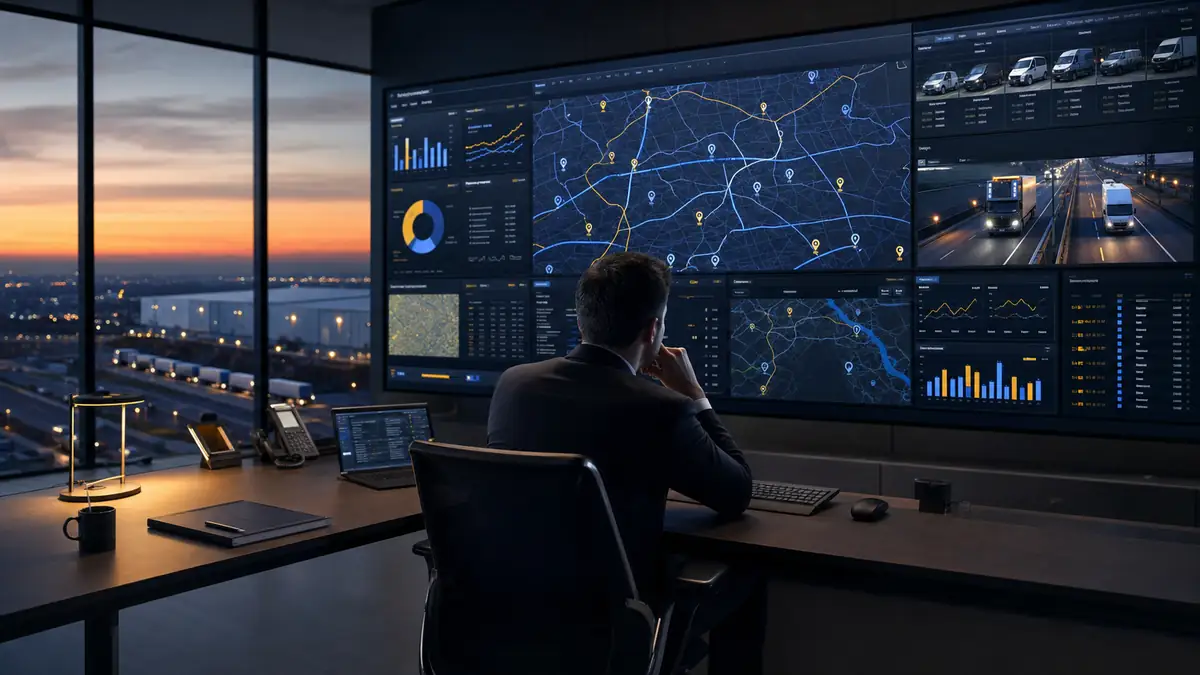
GPS tracking has become one of the most practical tools for modern fleet teams because it ties movement to business decisions. A map alone is useful, but real operational value appears when live vehicle location is connected to dispatch timing, route history, idle time, and service commitments. That is when a business can stop guessing where time is lost and start correcting the patterns that quietly raise cost.
What GPS tracking measures in a business setting
At a simple level, GPS tracking shows where a vehicle is. In a business setting, it also shows when the vehicle moved, how long it stayed at a stop, whether it followed the expected route, and whether the trip aligned with the work that needed to be done. That makes the system useful to operations leaders, dispatchers, finance teams, and site supervisors because they are all working from the same record instead of separate assumptions.
For fleets that manage deliveries, service runs, field teams, or support vehicles, that shared visibility changes the quality of every decision. A dispatcher can see if a unit is running late. A supervisor can review whether a route detour was necessary. A manager can understand whether a vehicle was being used efficiently. When the organization pairs that visibility with Vehicle GPS Tracking, the data becomes a practical control layer rather than a simple map view.
What the right tracking view should reveal
- Live location with enough freshness to support operational decisions.
- Trip history that shows route choice, stops, and idle periods.
- Alerts for speed, geofence activity, and route exceptions.
- Reporting that helps leaders understand trends rather than one-off events.
Where fleets lose time without realizing it
Time loss in a fleet is rarely dramatic. It usually accumulates through small inefficiencies that appear normal when there is no visibility. A driver waits too long at a pickup point. A dispatcher chooses a route based on habit instead of live traffic. A vehicle takes a longer return trip because no one noticed a better option. Those delays add up across weeks and branches until the company is spending more time and money on the same work.
GPS tracking helps uncover those hidden delays. It shows whether a truck was idling outside a site, whether a technician reached the customer on time, and whether the day’s plan matched the reality on the road. That insight helps managers improve scheduling, sequence jobs more intelligently, and protect service promises. When operations also rely on Employee Tracking, the business can compare travel time, arrival timing, and labor allocation in one operating picture.
Common sources of lost time
- Manual check-ins that slow down dispatch decisions.
- Route drift that adds minutes to every trip.
- Unplanned stops that are not reviewed until the day is over.
- Poor sequencing of jobs, pickups, or deliveries.
How GPS visibility helps reduce fuel waste
Fuel cost is often treated as a separate problem, but it is closely tied to how the fleet moves. Longer routes, repeated idling, detours, and aggressive driving all burn more fuel than necessary. GPS tracking gives the fleet a way to see those patterns in context. When managers can compare route history, idle time, and trip behavior, they can identify waste that might otherwise be mistaken for normal operating cost.
The savings are not just from cutting mileage. They also come from driving discipline and better routing choices. If a vehicle is sent across town twice when one trip would have sufficed, the cost compounds. If a delivery is scheduled for the wrong time of day, traffic can create fuel waste before the vehicle even reaches the customer. The combination of live data and historical trends helps leaders make decisions that lower consumption without hurting service quality.
What fuel discipline looks like in practice
- Reviewing idle reports every week instead of every quarter.
- Comparing route history before repeating the same assignment.
- Coaching drivers using specific trip data rather than general feedback.
- Using alerts to catch avoidable waste while it is still small.
Practical examples across fleet-heavy industries
In logistics, GPS tracking helps a dispatcher see whether a delivery vehicle is on pace, whether a route can be shortened, or whether a stop sequence should change before the customer notices a delay. In construction, support vehicles and service runs can be coordinated more efficiently when site managers can see which unit is closest and whether it was used productively. In field service, the same visibility helps supervisors improve arrival timing and reduce unnecessary back-and-forth between jobs.
These gains matter because they reduce the friction that people feel every day. Drivers get clearer instructions. Managers spend less time asking where a vehicle is. Customers receive more reliable timing. Finance sees a tighter link between trip volume and fuel use. A company that combines Vehicle GPS Tracking with AI Dashcam and route reporting can improve time usage, fuel usage, and accountability at the same time.
Examples of business impact
- A delivery fleet can reduce repeat trips by planning smarter stop sequences.
- A construction team can avoid sending multiple support vehicles to the same site unnecessarily.
- A service business can cut overtime by improving route timing and technician assignment.
Helpful Tips
The best GPS tracking rollouts start with a clear purpose. If the goal is to save fuel, define the behaviors you want to reduce. If the goal is faster service, define the arrival metrics that matter. If the goal is better coordination, define who reviews exceptions and who acts on them. This keeps the platform from becoming a passive dashboard and turns it into a daily management tool.
It also helps to standardize the hardware and process. Teams often review the Shop when they want one consistent setup across the fleet, then build a simple operating routine around alerts, reports, and coaching. Once the system is in place, the real value comes from regular review. Managers who study the data weekly are far more likely to capture savings than teams that only check reports after a problem surfaces.
CONCLUSION
GPS tracking is most valuable when it helps a business connect movement to cost. Once time use, route discipline, and fuel use are visible in one place, leaders can make better decisions and build a more predictable operation. If your team wants help deciding how to start, visit <a href="/contact">Contact Us</a> to discuss the best setup for your fleet.